
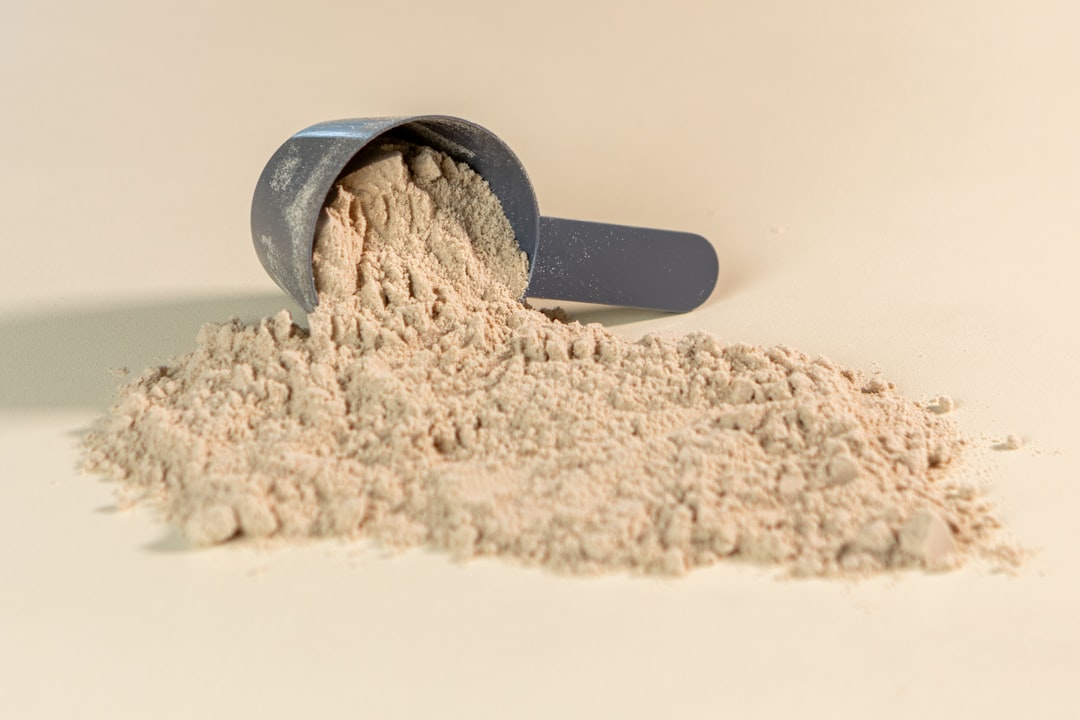
Protein Powder Intake: A Guide for Australians
On this page
Determining your ideal protein powder intake depends on your total daily protein requirements, which the NHMRC suggests should ideally come from whole-food sources like legumes, nuts, and dairy. For most healthy Australian adults, the recommended daily protein intake is 0.75g per kilogram of body weight for women and 0.84g per kilogram for men. While protein powder can be a convenient supplement to bridge a nutritional gap, a standard serving size of 20 to 30 grams is typically sufficient to support muscle recovery without exceeding your body's ability to synthesise the nutrient in one sitting. There is no established upper limit for protein in Australia, though it is generally advised that protein should not exceed 25% of your total daily energy intake to maintain a balanced way of eating.
How much protein powder per day is appropriate for Australians?
When considering your protein powder intake, it is essential to start with the foundations of the Australian Dietary Guidelines. These guidelines emphasise that our primary source of nutrients should be whole foods. However, in our busy modern lives, protein powder can serve as a practical supplement when your daily requirements aren't easily met through meals alone.
For a healthy adult woman in Australia, the baseline requirement is 0.75 grams of protein per kilogram of body weight. For adult men, this figure is slightly higher at 0.84 grams per kilogram. To put this into perspective, if you weigh approximately 75kg, your total daily protein target is roughly 60 grams.
When you look at the typical Australian shopping basket from Coles or Woolworths, you’ll find that a single chicken breast, a tub of Greek yoghurt, or a serving of lentils already gets you halfway to that goal. Therefore, the amount of powder you need is simply the 'gap' between what you eat and what your body requires. For many, this means one scoop is more than enough to round out the day.
What is the ideal protein powder serving size?
You might see athletes at the gym consuming massive shakes, but more isn't always better. The human body has a physiological 'ceiling' for how much protein it can effectively use for muscle repair at one time. Research suggests that we can typically only absorb and utilise between 20 to 40 grams of protein in a single sitting for muscle-building purposes.
If you consume significantly more than this in one go, the excess isn't necessarily 'wasted', but it isn't going toward your biceps either. Instead, the body may use it for energy or excrete it. Most commercial powders available in Australia provide a scoop size of roughly 25 to 30 grams, which aligns perfectly with these physiological limits. For those focused specifically on post-exercise recovery, sports nutrition experts often recommend a serving of 15 to 25 grams to efficiently support muscle repair without overcomplicating your digestion.
When is the best time to take protein powder?
There has long been a myth about a narrow 'anabolic window'—the idea that you must drink your shake within thirty minutes of finishing a workout or lose your progress. Fortunately, modern evidence shows that our bodies are much more flexible than that. The timing for muscular adaptation is much wider than previously believed.
Clinical studies have shown that consuming protein immediately before a workout results in similar muscle thickness and strength gains as consuming it immediately after. Whether you prefer a shake as a pre-training snack or a post-training recovery drink, the impact on your lean body mass remains statistically similar.
Ultimately, consistency is the winner. Meeting your total daily protein intake over the course of 24 hours is far more critical for long-term health and strength than the specific minute you consume your shake. If a morning smoothie helps you stay consistent, that is the 'best' time for you.
Is too much protein powder bad for your health?
While protein is a vital macronutrient, balance is the cornerstone of sustainable nutrition. Excessive protein intake can place a significant strain on the kidneys, particularly for individuals who may have underlying or undiagnosed kidney conditions. This is because the kidneys are responsible for filtering the byproducts of protein metabolism.
High levels of consumption have also been linked to an increased risk of kidney stones and a buildup of urea nitrogen in the blood. To keep things in balance, the NHMRC suggests that protein should not exceed 25% of your total daily energy intake.
By keeping within this range, you ensure that you aren't accidentally displacing other essential nutrients. If your kilojoules are coming almost exclusively from protein, you might be missing out on the fibre found in Australian fruits, vegetables, and whole grains, which are vital for gut health and long-term wellbeing.
What are the hidden risks in some protein powders?
It is important to remember that protein powders are processed supplements, not whole foods. Because they are often regulated differently than standard groceries, the purity of ingredients can vary. Independent screenings of over 130 protein powder products have identified the presence of heavy metals, including lead, arsenic, and cadmium.
Furthermore, some products have tested positive for bisphenol-A (BPA), a chemical used in plastic manufacturing. To protect your health, it is wise to choose reputable Australian brands that prioritise third-party testing. Look for labels that mention 'Informed Sport' or similar certifications, which provide an extra layer of quality control against unwanted toxins and contaminants.
Is there a daily protein powder limit?
In Australia, there is currently no formal 'Upper Level' of intake established for protein, largely because there isn't enough data to show exactly where the 'danger zone' begins for healthy people. However, the absence of a legal limit shouldn't be taken as a green light for excessive use.
Nutritionists generally recommend using these products as a 'top-up' rather than a primary food source. Limiting yourself to one or two servings per day is a sensible way to enjoy the convenience without over-relying on a processed product. We also encourage considering the environmental impact; while whey is popular, sustainable Australian-grown plant proteins like lupins or chickpeas offer a wonderful, low-impact alternative that supports local farmers.
FAQ
Can I use protein powder as a meal replacement? While protein powder provides essential amino acids, it lacks the complex fibre, vitamins, and minerals found in whole foods. It is best used as a supplement to a balanced nutrition approach rather than a total meal replacement. A liquid shake doesn't provide the same satiety or digestive benefits as a meal containing whole grains and vegetables.
Does the type of protein (whey vs plant) change the intake amount? The total grams of protein are what matter most for meeting your daily targets. However, you should always check the label for added sugars, artificial sweeteners, or thickeners that are often found in both dairy and plant-based powders. Some plant proteins may require a slightly larger serving to reach the same leucine content (an amino acid important for muscle) as whey.
How do I calculate my specific protein needs? Multiply your body weight in kilograms by 0.75 (for women) or 0.84 (for men) to find your baseline daily grams. If you are highly active or engaging in heavy resistance training, your needs may increase slightly, but for most Australians, staying within the range of 15% to 25% of your total daily kilojoule intake is the safest and most effective strategy.
Related reading
Protein Intake for Muscle Building in Australia
Learn the optimal protein intake for muscle building Australia targets to support your training and refine your eating plan with evidence-based guidance.
4 min read
Protein Intake for Muscle Building Australia: A Complete Guide
Optimise your protein intake for muscle building Australia with our evidence-based coaching app to support muscle growth and recovery through better
5 min read
How Much Protein to Lose Weight: An Evidence-Based Guide
Learn how much protein to lose weight effectively while supporting muscle maintenance and satiety with our evidence-based coaching app and eating plan.
4 min read
Magnesium Intake for Sleep and Recovery Australia
Optimise your magnesium intake for sleep and recovery Australia by discovering evidence-based food sources and muscle repair strategies on our platform.
5 min read
Need a hand with the app? What is Platify and how does the coaching work?
Get the Platify app
Build a meal plan around the foods you already like, log what you eat, and watch your progress. Free to start.
Get the appCitations
- [1]Protein, Dietitians Australia (2023)
- [2]When it comes to protein, how much is too much?, Harvard Health Publishing (2022)
- [3]Weighing protein powders, Harvard Health Publishing (2020)
- [4]Pre- versus post-exercise protein intake has similar effects on muscular adaptations, PeerJ (2017)
- [5]Nutrient Reference Values: Protein, NHMRC (2014)
- [6]The hidden dangers of protein powders, Harvard Health Publishing (2018)
Frequently asked
Can I use protein powder as a meal replacement?
While protein powder provides amino acids, it lacks the complex fibre, vitamins, and minerals found in whole foods. It is best used as a supplement to a balanced diet rather than a total meal replacement.
Does the type of protein (whey vs plant) change the intake amount?
The total grams of protein are what matter most for meeting your daily targets. However, ensure you check the label for added sugars or artificial thickeners often found in both dairy and plant-based powders.
How do I calculate my specific protein needs?
Multiply your body weight in kilograms by 0.75 (for women) or 0.84 (for men) to find your baseline daily grams. If you are highly active, this may increase slightly, but should generally stay within 25% of your total energy intake.